

Driving Change: How Change Management Helps Us Improve Production.
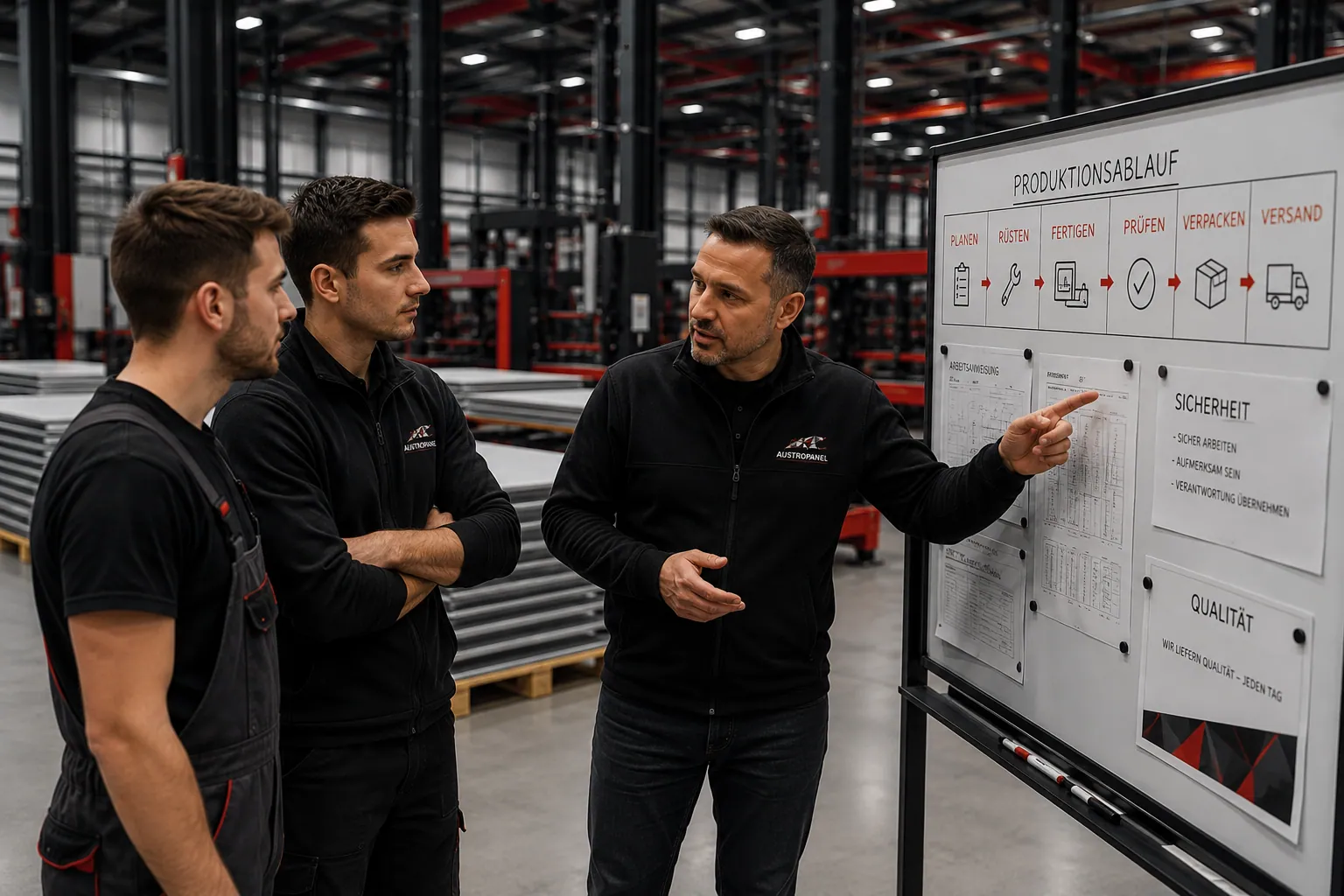
Change is an inherent part of industrial production, whether it involves new requirements, increasing volumes, or technological advancements. However, what matters is not whether processes change, but how those changes are implemented. Haphazard adjustments often lead to instability, while clearly planned steps lay the foundation for reliable production in the long term.
Gain insights into production, processes, and new developments related to sandwich panels and industrial building construction.

Change is an inherent part of industrial production, whether it involves new requirements, increasing volumes, or technical advancements. However, what matters is not whether processes change, but how those changes are implemented.
Haphazard adjustments often lead to instability, while clearly planned steps lay the foundation for reliable, long-term production.
Why Changes in Production Are Necessary
Production environments are under constant pressure to adapt, as requirements stemming from construction projects, technical specifications, or economic conditions are constantly changing.
Those who fail to respond to these changes risk long-term declines in quality or inefficient processes.
Common triggers include:
- new requirements for materials or construction
- increasing production volumes
- Changes to standards or technical specifications
- Optimization of existing processes
Change is therefore not an exception, but part of normal operations.
The challenge: stability in the face of change
The biggest challenge is implementing changes without disrupting existing processes.
In production in particular, unclear changes often lead to:
- Quality deviations
- Delays in the process
- increased susceptibility to errors
That is why it is crucial to implement changes in a structured and transparent manner, rather than on a whim.
How structured adjustments are implemented
Sustained growth in production is based on clear principles that ensure new requirements are integrated in a controlled manner.
These include:
- Clear definition of the change
Each change is described in technical terms and defined in advance
's changes will be implemented gradually; they will not be introduced simultaneously across all areas, but will be rolled out in a controlled manner- Ongoing review
Processes are monitored and evaluated during and after implementation - Transition to stable processes
The goal is to transform every change into a new, stable standard
This approach prevents adjustments from becoming long-term disruptions.
The impact on quality and reliability
Structured changes have a direct impact on production quality.
When adjustments are implemented in a transparent manner, results remain reproducible even when new requirements are introduced.
This is particularly evident in:
- consistent product quality
- reliable manufacturing processes
- predictable workflows for downstream trades
In the construction industry in particular, this reliability is crucial, as deviations can quickly lead to delays or additional costs.
Conclusion
Changes in production are inevitable, but they can be managed.
The key is to ensure that adjustments are not viewed in isolation, but rather as part of a structured process that combines stability with ongoing development.
A controlled implementation ensures that new requirements can be integrated without compromising the existing quality and reliability of production.
.webp)
