

Skilled Workers in Manufacturing: Why Clear Structures Are More Important Than Benefits
An article on why structured workflows and clear responsibilities are more important than short-term incentives when it comes to skilled production workers.
Gain insights into production, processes, and new developments related to sandwich panels and industrial building construction.
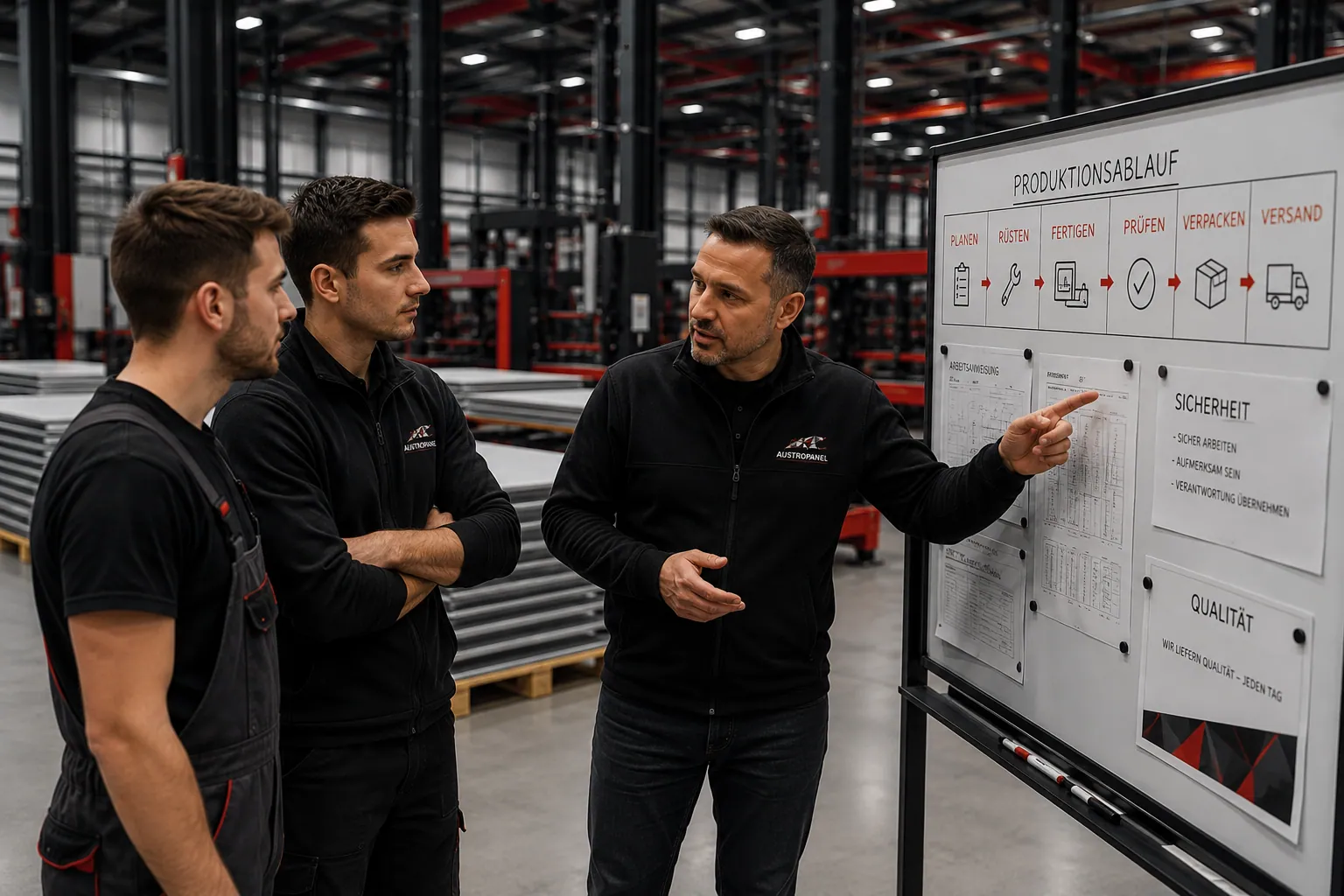
The shortage of skilled workers is evident in many manufacturing facilities. Companies often try to address this problem with additional benefits or short-term incentives. While these measures can help, they rarely solve the underlying issue. What matters is not what additional perks are offered, but the conditions under which employees work on a daily basis.
In industrial production, skilled workers are looking for one thing above all else: stable and transparent work processes.
Why benefits alone aren't enough
Additional benefits can make a company more attractive, but they are no substitute for a well-functioning structure. When processes are unclear, responsibilities are not clearly defined, or decisions have to be made over and over again, it creates uncertainty in day-to-day work.
Common consequences include:
- increased susceptibility to errors
- Frustration caused by unclear responsibilities
- high turnover in the team
Benefits cannot compensate for these problems because they do not address the root cause.
Structure as the foundation for quality work
A stable production environment is characterized by employees knowing what is expected of them and how processes work. Clear processes provide guidance and reduce unnecessary coordination.
Key factors include:
- clearly defined areas of responsibility
- transparent and repeatable workflows
- clear lines of communication
- reliable scheduling of work hours and workload
This structure ensures that employees can focus on their work instead of constantly having to react to changes.
Responsibility and Reliability Within the Team
In addition to clear processes, accountability plays a key role. When responsibilities are clearly defined, there is less friction, and decisions can be made more quickly.
This has a direct impact on collaboration:
- less coordination effort
- greater personal responsibility
- a more stable team structure
This creates a work environment that is sustainable in the long term and does not depend on individual people.
Why stability is a crucial factor
In manufacturing, predictable workflows are a key factor in employee satisfaction. When processes are regularly adjusted or workflows are constantly changing, it creates uncertainty. This affects not only quality but also motivation.
Stable structures, on the other hand, build trust because they:
- Providing reliability in everyday work
- set clear expectations
- enable long-term planning
That is often more important than additional incentives.
Conclusion
You can’t retain skilled workers in the long term with benefits alone if the basic systems aren’t working. What matters most are clear structures, defined responsibilities, and reliable processes.
Companies that lay this foundation not only build reliable teams but also ensure the long-term quality and stability of their production.


