The Future of Industrial Production: What Will Really Change
An article on the trends that will shape industrial production and why structured processes remain more important than short-term trends.
Gain insights into production, processes, and new developments related to sandwich panels and industrial building construction.

Industrial production is undergoing constant change. Technological advancements, rising demands for quality and efficiency, and shifting conditions in the construction and industrial sectors mean that production processes must continually evolve. At the same time, it is clear that not every change automatically leads to better results.
The key question is which developments are actually relevant and how they can be integrated into existing structures.
Technology as a driver, not as a solution
Automation and digitalization are often cited as key issues for the future. Modern facilities, networked systems, and data-driven control offer new opportunities to make processes more efficient. Nevertheless, technology remains a tool and not a solution in and of itself.
Without clear procedures and defined processes, even the use of modern technology will not lead to more reliable results. Only when technology is integrated into existing structures can it reach its full potential.
Increasing demands for quality and precision
As construction projects become increasingly complex, so do the requirements for the materials and components used. Dimensional accuracy, workmanship, and technical properties must be verifiable over the long term.
As a result, production processes must be increasingly standardized and controlled. At the same time, the importance of the following is growing:
- consistent results across all production volumes
- clearly defined quality standards
- transparent testing processes
These factors will become even more central in the future.
A balance of flexibility and stability
Another key consideration is the balance between flexibility and stability. Manufacturing companies must be able to respond to new demands without disrupting their operations.
Too much flexibility often leads to instability in the system, while overly rigid structures make it difficult to adapt. The challenge lies in implementing changes in a controlled manner while maintaining a stable foundation.
The Role of Structure and Organization
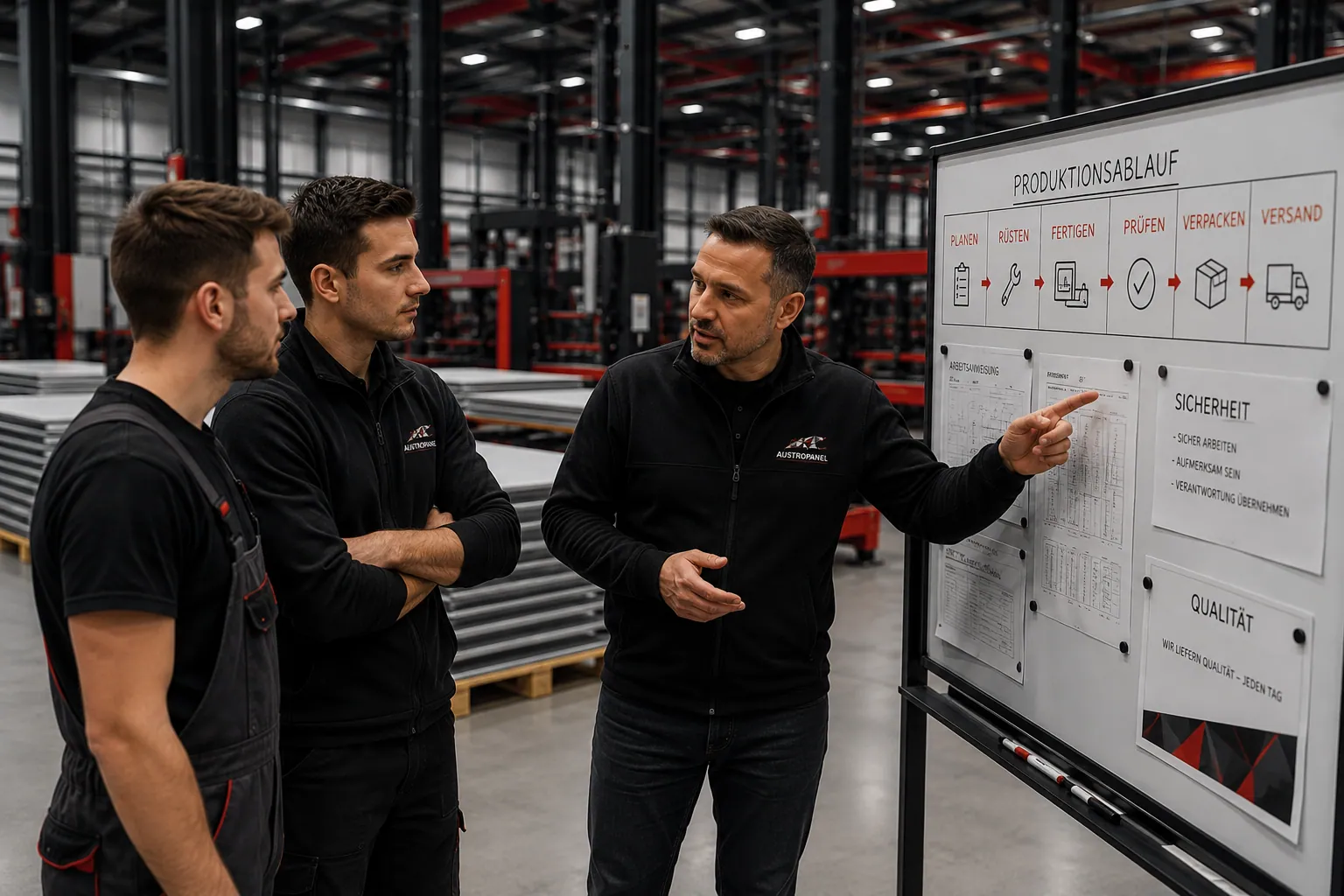
In addition to technical advancements, the organization of production remains a critical factor. Clear responsibilities, defined processes, and a shared understanding of quality form the foundation for any further development.
In the future, the focus will be less on implementing as many new technologies as possible and more on structuring existing processes in such a way that they continue to function even under changing conditions.
Conclusion
The future of industrial production is shaped by technology, increasing demands, and growing complexity. At the same time, it is clear that stable processes, clear structures, and transparent workflows remain the cornerstone of success.
Companies that establish this foundation and integrate changes in a controlled manner will be able to ensure quality and sustainably develop their production over the long term.